18+. The welcome offer shown here is the one the partner gives the site owner; availability depends on your country and your eligibility. Bonus size, qualifying deposit, wagering, eligible games, maximum bet, expiry and withdrawal limits are set out in the operator’s own terms and are not repeated here. We do not promise payout times. Offshore operator, not licensed by the Gambling Commission of Great Britain. Gambling involves financial risk — free confidential help at begambleaware.org, 0808 8020 133.
Short answerA deposit limit can mean a figure you set on yourself or a ceiling the operator applies without telling you the number. The first is a tool with a published procedure; the second is a judgement you discover by running into it.
Our top pick
22BET — 100% up to £100 on your first deposit
Regulator
Gambling Commission of Great Britain
Credit cards
Banned for gambling since April 2019
Minimum age
18
Tax on winnings
None for the player
Self-exclusion
GAMSTOP, free and nationwide
Two different things share the name
Ask about a deposit limit and you may be asking either of two questions. One is about a cap you place on yourself: a figure chosen by you, entered in the account settings, after which the cashier stops taking money from you for the rest of the period. The other is about a ceiling the operator applies to the account for reasons of its own, which you did not choose and may never see written down anywhere at all.
The two behave in opposite directions. Yours is a published tool with a procedure attached: you set it, you may tighten it whenever you like, and loosening it takes longer than tightening it. The operator's is a commercial and regulatory judgement that can change without being announced. Neither has anything to do with the floors described under the smallest amount accepted, which govern how little may go in rather than how much.
The limit you set is a tool, and it is yours
A self-set cap is not a penalty and not an admission of anything. It is a budgeting instrument that happens to live inside the thing being budgeted, and that is precisely what makes it work: the decision gets made once, calmly, and is then enforced by the cashier at the moment when deciding again would be hardest. That is the entire design, and it is why the tool is worth using by somebody who would never describe themselves as being at any risk.
It works best when the figure was arrived at away from the account rather than one that felt about right with the cashier already open. The wider set of controls set out under tools for keeping control includes several others — reminders about time, caps on losses, breaks in play — and the deposit cap is simply the bluntest and most literal of them, since it governs money rather than behaviour.
Where the tool lives and what period it covers
It sits in the account settings rather than in the cashier, usually in the same area as your contact and identity details, and a licensed desk is expected to keep it findable rather than bury it three menus down. The figure is always set against a period: a day, a week, a month, sometimes all of those together with the tightest one binding. Where several periods run at once, whichever you reach first is the one that stops the payment.
Two details repay a look while you are setting it. The first is how the period resets, because a rolling window and a calendar month behave quite differently at a month end. The second is whether the figure counts deposits attempted or deposits accepted. Since the tool lives beside the account's own records, this is also a sensible moment to confirm that the identity details held are still current, as both are maintained in the same place.
Down works at once, up has to wait
The asymmetry is the most important thing on this page. A reduction applies immediately: you lower the figure, the cashier accepts the new one, and there is no waiting period because there is no risk in letting somebody spend less. An increase does not apply immediately. It is recorded, a waiting period runs, and the higher figure becomes active only once that period has elapsed — and in a well-built tool you are asked to confirm it a second time at the end.
Both halves of that are deliberate and neither is a processing delay. Nothing is being checked or verified while an increase sits waiting; the wait itself is the feature. If the figure you want is lower, it is yours in a moment. If it is higher, you have been handed time you did not ask for, and the tool is working exactly as intended when it declines to hurry.
A practical point follows from that asymmetry. If you are unsure which figure to choose, choose the lower one: it can be tightened again at any moment and loosened later if it proves wrong, whereas starting high and correcting downwards means the high figure was live in the meantime. The tool rewards caution because only one of the two directions is instant.
Why the wait on an increase is deliberate
The reasoning is about when decisions get made. Somebody deciding to raise a cap in the middle of a session is not in the same state as the same person deciding it on a quiet afternoon, and the gap between those two states is where most regretted spending happens. A delay separates the decision from the moment that produced it, and a confirmation at the end of the delay makes the decision happen twice, once in each state.
So the delay does something a bank block cannot do and a closed account does not need to. It refuses you nothing permanently. It simply declines to let an impulse become a payment within the same minute. Anyone who has raised a limit, waited, been asked again and then turned the increase down has had the tool work exactly as designed, and nothing about that outcome is a fault in the software.
What a self-set limit does not do
A cap governs what the account will take in. It does not touch a balance that is already there, it does not stop you playing with money you have, and it places no restriction at all on withdrawals — a payout is not a deposit and the cap has no bearing on one. It does not close the account, suspend it, or mark it in any way that another operator could see.
It also does not explain every refused payment, and the two get confused constantly. A payment stopped by your own cap produces a clear message that names the limit. A payment that disappeared with no message at all is a different matter, and the four states described under a deposit still missing are where to look instead. Telling the two apart takes one careful glance at whatever the cashier actually said.
The desk's own ceiling, which you meet without asking
Operators apply ceilings of their own and they are not advertised in the same way. Some are commercial: a maximum accepted on a particular route, or a figure above which a payment is looked at before it is credited. Some follow from the duty to understand a customer, which is why a run of larger payments can produce questions rather than a balance. You generally find these by meeting one, and support will usually confirm that a limit applies without quoting the figure to you.
That is normal rather than evasive. Publishing the exact threshold at which an account gets reviewed would tell the wrong people precisely where to stop. Ceilings exist in the other direction too, and caps on what leaves are published far more openly, because those are terms you are expected to plan around rather than controls aimed at misuse.
It is worth knowing that meeting an operator ceiling is not a verdict on you. Those figures sit where they do because of what a desk has to be able to explain about its customers, not because of anything it has concluded about one of them. Treating the questions that follow as routine, and answering them once with documents rather than in instalments, is the quickest way through.
A limit at one desk is a limit at one desk
This is the boundary people discover too late. A cap you set binds the operator you set it with and nothing further. It does not travel to another site, it does not bind another brand owned by the same company unless the accounts are genuinely shared, and it has no effect whatsoever on your bank. The tool is a term of your relationship with one desk, so its reach ends where that relationship ends.
Which is why the instruments in this area are worth separating before choosing between them. Two are controls you operate, one is operated by your bank, and one is a register you put yourself on. Rules that bind the whole market are a category of their own and need nobody to opt in: the ban on credit card deposits is the clearest example, which is why it needs no setting and cannot be switched off by anyone.
Instrument
Who operates it
How far it reaches
How it is undone
A deposit cap you set
You, inside one account
That one operator and no further
Lowered at once; raised after a wait
The operator's own ceiling
The operator
That operator's account
Not yours to change; support confirms it applies
A bank gambling block
Your bank or card app
Gambling payments from that account
At the bank, which applies its own delay
Self-exclusion
You, through a register or a desk
Licensed operators within its scope
Not on demand; it runs its stated term
Four instruments, four owners, four reaches
The bank block is a different lever on the other side
Banks offer a switch that refuses gambling payments outright, and it sits on your side of the payment rather than the desk's. The distinction matters: a cap at a desk stops you funding one account, while a block at the bank stops the payment leaving at all, whoever it was going to. It works from the category a payment is coded in, which means it catches desks you have never visited as readily as the one you had in mind.
App-based banks made the feature widely known, and the control described under blocks in an app bank rests on the same principle as the equivalent switch in a card app's settings. Turning one on is immediate; turning it off generally is not, for the same reason an increase waits at a desk. What such a block does and does not catch is set out under the bank block itself, including the payments that pass it because they are coded as something else.
Self-exclusion is not a limit at all
Self-exclusion belongs in a different category altogether. A limit says how much; self-exclusion says not at all, for a stated period, and it is built to be difficult to reverse rather than easy. In Britain there is a national register covering licensed operators, and registering closes the door across them rather than at a single desk. That reach is the entire value of the instrument.
Two things follow and both are worth stating plainly. The first is that it is not a budgeting tool and should not be pressed into service as one; it exists for the decision to stop, not for the decision to spend less. The second is that getting round it means leaving the licensed market, and everything attached to the licence leaves with it — the rules, the complaints route, and anybody under an obligation to answer you. If stopping is the question, free and confidential help is at begambleaware.org, and the National Gambling Helpline is on 0808 8020 133.
Who makes a desk offer you the tool
The reason the tool exists at all is the licence. A desk operating in Britain under a licence has to give customers controls over their own spending and has to make them usable, which is why the feature looks broadly similar from one site to the next — and why a site with nothing of the kind anywhere in its settings is telling you something important about itself before you have paid it a penny.
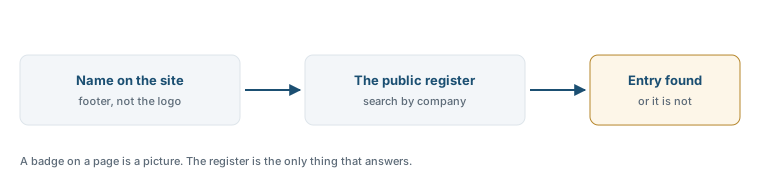
Checking the licence is therefore not a formality. The company named on the site should appear in the public register, searchable at gamblingcommission.gov.uk, and what a licence guarantees is best read before you have any reason to rely on it. A badge in a footer is a picture of a claim. The register is the only thing that answers the question.
The tool exists because of a licence, and the register is where a licence is confirmed.
If a limit was not applied the way you set it
Occasionally a cap does not behave as set: a payment goes through above the figure, or an increase activates sooner than it should have done. Treat that as a documented complaint rather than a conversation. Note the figure you set and when you set it, the payment that ought to have been refused, and whatever message the cashier displayed, then put all of it in writing and ask for the account's own record of the limit and its history.
That record exists, because a tool of this kind has to be auditable. If the answer you get does not match it, the complaint goes to the independent route the licence requires, with the same three details attached. This is one of the few disputes in which the evidence sits entirely in the operator's own logs, which makes a written request considerably more useful than an argument in a chat window.
Keep the evidence in a form that survives. A screenshot of the settings page with the figure and the date visible is worth more than a recollection, and the message shown when a payment is refused is worth keeping even when the refusal was correct, because it establishes what the cashier displays when the tool is working properly.
Setting the figure before an offer sets it for you
Offers are built to suggest an amount. A qualifying figure is a number somebody else chose, and the machinery around it exists to make that number feel like the natural one to pay. None of this is sinister, but it does mean the figure in your head at the cashier frequently arrived from outside your own budget. Deciding the cap first turns that round: the offer then has to fit your number instead of supplying it.
The order is worth holding to. Set the cap, read what a first offer requires, and only then decide whether the two are compatible, because an offer needing more than the cap allows is simply an offer you are not taking. That is a cleaner answer than raising the cap and waiting out the delay, and it is why reading the step where payouts begin alongside your own figure is more use than reading either of them alone.
Questions people ask
What is the difference between my limit and the operator's?
Yours is a tool you set in the account, published and documented, with a procedure for changing it. The operator's is a ceiling applied for commercial and regulatory reasons, which is not yours to alter and may never be quoted to you as a figure. Both can stop a payment, but only one of them answers to you.
Why does lowering a limit work instantly while raising it does not?
Because nothing needs checking before somebody spends less, whereas a higher figure wants separating from the moment the decision was made. The wait is the design rather than processing time. A well-built tool also asks you to confirm the increase once the wait has run.
Can a limit be lifted in an emergency?
No, and the absence of an override is the point of it. Support cannot shorten the wait on an increase, and asking repeatedly will not change that. If a payment is urgent for reasons unconnected with gambling, this is not the account to be making it from.
Does a deposit limit stop withdrawals?
No. The cap applies to money coming in, and a payout is money going out. Nothing about a limit affects a balance already on the account or a request to take that balance out.
Does a limit set at one casino apply at others?
No. It binds the operator you set it with and does not reach other brands or your bank. If you want something wider, a bank block covers gambling payments from the account whoever they are going to, and self-exclusion covers licensed operators within its scope.
Is a bank block the same thing as a deposit limit?
No. A limit caps funding at one desk; a block refuses gambling payments from your account altogether. The block is operated by your bank, works from the way a payment is coded, and is switched off at the bank rather than at the casino.
Which period should the limit be set over?
Whichever matches the way money actually reaches you, and several periods can usually run at once with the tightest one binding. Check how the period resets, since a rolling window and a calendar month end differently. The part that matters most is choosing the figure away from the cashier.
A payment went through above my limit. What now?
Put it in writing: the figure you set and when, the payment that should have been refused, and the message shown at the time. Ask for the account's record of the limit and its history, which the operator is obliged to hold. If the reply does not match that record, take it to the independent route the licence requires.
Does using a limit suggest there is a problem?
No. It is a budgeting instrument that happens to sit inside the thing being budgeted, which is exactly why it works. Deciding once, calmly, is easier than deciding again with the cashier already open in front of you.
What if I want to stop altogether rather than spend less?
That is self-exclusion rather than a limit, and it is built to be hard to reverse for its stated term. In Britain a national register covers licensed operators, so it reaches considerably further than one account. Help with that decision is free and confidential, and the helpline number is in the section above.
 UK Cash DeskOpen the cashier


 100% up to £100 on your first deposit